The rapid advancement of Artificial Intelligence is irrevocably transforming every sector, and enterprise architecture is no exception. While many industries are grappling with how to integrate AI into existing frameworks, the true differentiator lies in developing an architect mindset—a proactive, holistic approach to leveraging AI not merely as a tool, but as the foundational operating system for an entire enterprise. Traditional business models, often characterized by fragmented systems, siloed data, and reactive decision-making, are proving inherently inadequate in this new AI era. Simply bolting AI features onto legacy CRMs or ERPs creates “AI puddles” rather than a unified “ocean of intelligence,” severely limiting an organization’s potential for true strategic growth and operational coherence. This article will delve into how businesses can move beyond these superficial integrations, adopting an AI-native perspective that re-architects design, strategy, and operational efficiency from the ground up. We will explore the critical steps required to cultivate this transformative approach, from understanding AI’s foundational impact and integrating it seamlessly into workflows to sustaining an adaptive vision for the future, ultimately empowering organizations to achieve unparalleled agility and a significant competitive advantage.
Summary
- Laying the Groundwork: Understanding AI’s Foundational Impact on Architecture
- Cultivating an Architect Mindset for the AI Era: Beyond Traditional Boundaries
- Integrating AI into the Design Workflow: Practical Strategies and Tools
- Architecting Business with AI: Strategic Transformation for Modern Practices
- The Evolving Role: Sustaining an Adaptive AI-Driven Architectural Vision
Laying the Groundwork: Understanding AI’s Foundational Impact on Architecture
AI is no longer just a tool; it represents a paradigm shift reshaping the entire architectural discipline. From conceptualization to operational management, artificial intelligence profoundly integrates, moving beyond simple automation. This fosters new capabilities in design, analysis, and optimization, demanding a critical re-evaluation of established practices. Grasping this foundational impact is the crucial first step toward cultivating a modern and effective design approach.
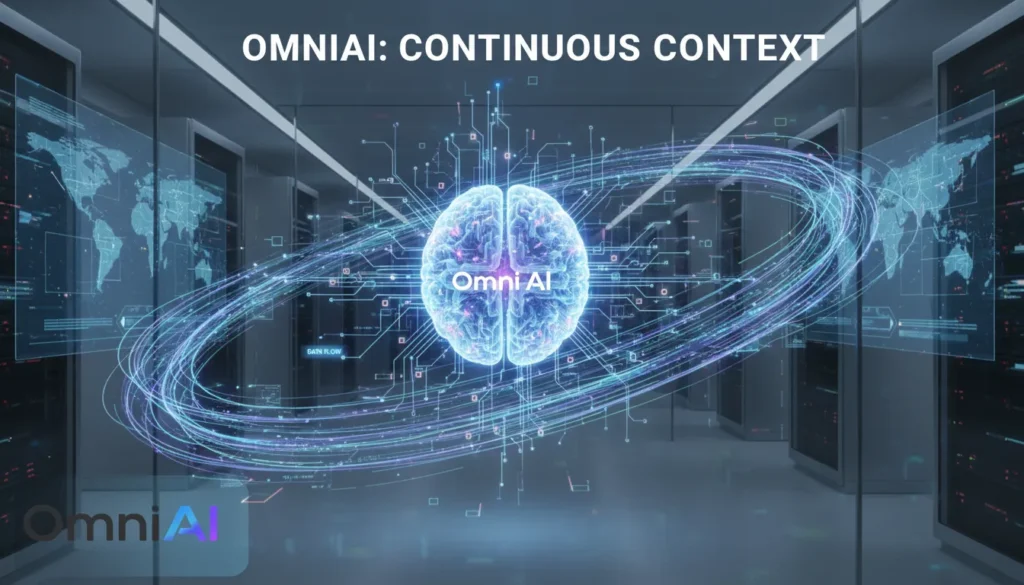
Architectural processes were historically sequential and siloed. Now, AI-native platforms, exemplified by Omni AI’s BrainAI, introduce an orchestrator for continuous context flow. This fundamental change mirrors the “Möbius Strip” concept, ensuring insights from one phase seamlessly inform all others. Such continuity enables proactive problem-solving and adaptive design, shifting from reactive adjustments to deeply integrated, intelligent workflows where systems learn and evolve.
The shift to an AI-driven paradigm drastically enhances efficiency and complexity management. AI algorithms process vast datasets on environmental conditions, material performance, and user behavior, far exceeding human analytical capabilities. This allows architects to explore numerous design iterations, optimize for diverse constraints, and predict long-term performance. Decisions become more informed, reducing risks and improving project outcomes by augmenting human creativity.
Embracing these advancements requires more than new software; it necessitates a fundamental transformation in professional thinking. Professionals must evolve from conceptualizing static structures to designing dynamic, intelligent environments that interact and adapt. This approach involves understanding data flows, algorithmic decision-making, and continuous learning systems, preparing individuals to leverage AI as a strategic partner for an innovative and resilient future.
Cultivating an Architect Mindset for the AI Era: Beyond Traditional Boundaries
The advent of artificial intelligence fundamentally redefines the role of an enterprise architect, demanding an evolution beyond conventional system design. Traditional architectural models, often built on siloed data and disconnected applications, prove inherently limited in leveraging the full potential of AI. This outdated fragmentation creates significant barriers to unified intelligence, where isolated systems prevent comprehensive insights and proactive decision-making. Cultivating a strategic perspective for the AI era means adopting a holistic, integrated view that prioritizes seamless data flow and intelligent orchestration as core tenets, rather than as mere features.
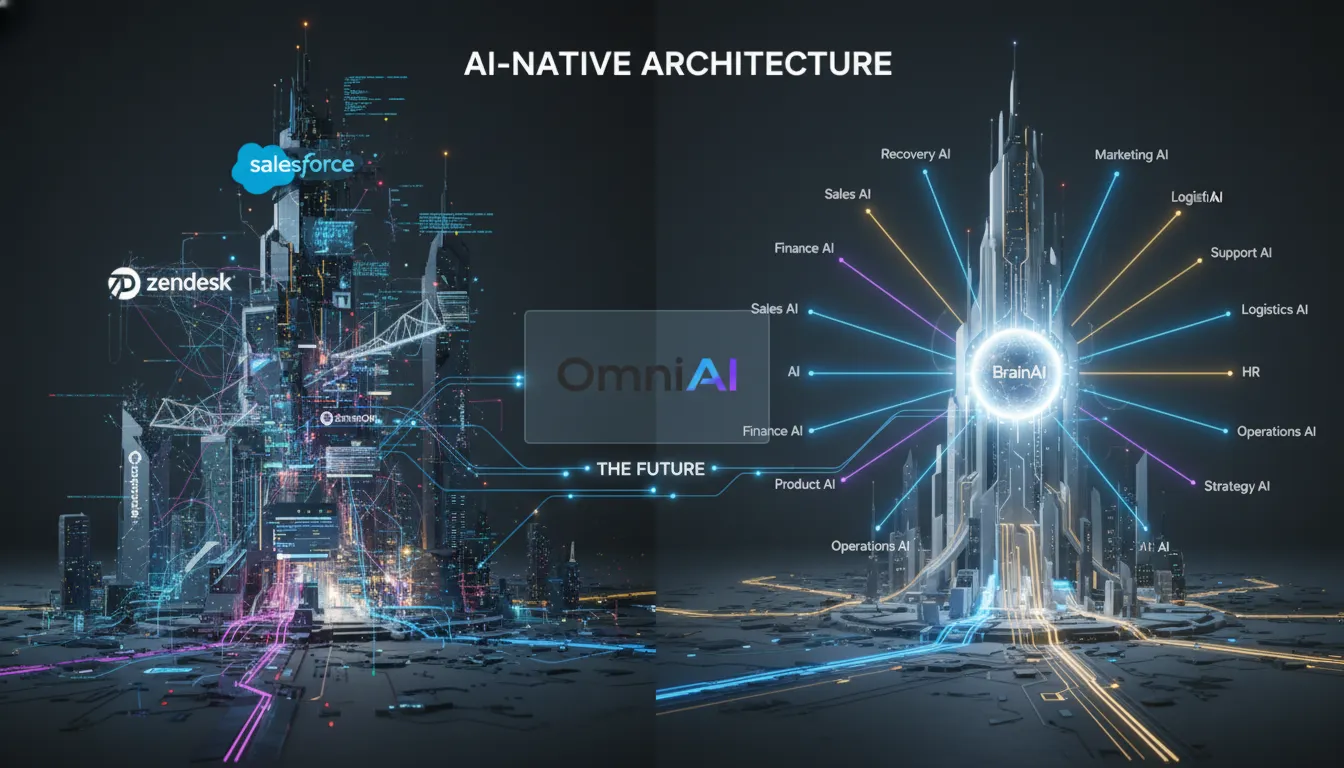
This new approach necessitates a complete paradigm shift towards AI-native architectures, fundamentally different from merely retrofitting AI onto legacy systems. The concept of a “Möbius Strip of Data” becomes paramount, ensuring an unbroken, continuous flow of information across all operational touchpoints. What one AI agent learns in a sales interaction, for instance, immediately enriches the context for customer support or financial recovery. This eliminates critical information gaps, fostering an environment where every piece of data contributes to a perpetually learning and evolving intelligence layer, making the entire organization more cohesive and responsive.
At the heart of this transformative architectural vision lies a central orchestrator, exemplified by Omni AI’s BrainAI. This core intelligence transcends passive data processing, acting as the proactive operating system for the entire enterprise. It intelligently commands an ecosystem of specialized agents – from Sales AI to Recovery AI and Finance AI – ensuring they work in concert to achieve strategic objectives. This shift from reactive analysis to proactive command, coupled with robust global governance and data security, allows companies to not only process information faster but to anticipate challenges and drive intelligent automation across all functions.
Embracing this design philosophy enables organizations to move beyond the limitations of traditional CRMs and ERPs that merely add AI as an afterthought. It champions a unified intelligence layer where every operational activity contributes to a collective, sovereign context. This holistic understanding empowers executive decision-making with real-time, comprehensive insights, driving unparalleled operational efficiency and strategic agility in a rapidly evolving business landscape.
Integrating AI into the Design Workflow: Practical Strategies and Tools
Integrating AI into modern design workflows is no longer a luxury but a strategic imperative, demanding a profound shift in perspective towards efficiency and innovation. This transformation requires adopting practical strategies and leveraging advanced tools to augment human capabilities. One primary strategy involves generative design, where AI algorithms explore vast solution spaces based on predefined parameters, offering optimized alternatives designers might not conceive manually. Another crucial approach is predictive analytics, utilizing AI to forecast performance, user behavior, or system loads, enabling proactive design decisions that mitigate future issues.
Beyond generation and prediction, AI excels in automated iteration and optimization. Tools powered by machine learning can rapidly test and refine design variations, learning from simulated or real-world feedback to converge on superior solutions. Furthermore, contextual learning systems enhance the design process by understanding user preferences and operational data across the entire organizational ecosystem. This continuous feedback loop ensures designs are not only aesthetically pleasing but also functionally robust and aligned with business objectives.
For this seamless integration to thrive, the right tools are paramount. While many platforms offer AI as an add-on, truly AI-native solutions provide a cohesive advantage. Consider Omni AI’s approach, where its BrainAI acts as an orchestrator, driving specialized agents like Sales AI, Support AI, and Finance AI. This architecture embodies the “Möbius Strip of Data,” ensuring that insights gained from one operational area flow continuously to others. For instance, customer feedback processed by Support AI directly informs future product design iterations, fostering an integrated design workflow. This sophisticated framework allows professionals to cultivate a visionary outlook, focusing on strategic oversight while AI handles complex data analysis and repetitive tasks, elevating overall design quality and operational coherence.

Architecting Business with AI: Strategic Transformation for Modern Practices
Modern enterprises must fundamentally re-architect operations around AI, not merely adopt it. Traditional business frameworks, often built on siloed departmental systems, struggle to fully leverage AI’s potential. This fragmentation creates disconnected data, inefficient workflows, and a reactive posture, severely hindering strategic growth. Businesses relying on legacy CRMs like Salesforce or ERPs, appending AI features to aging infrastructures, face significant disadvantages.
True strategic transformation demands an AI-native approach, where intelligence forms the operational fabric’s core. Omni AI embodies this paradigm shift, offering a unified corporate intelligence layer beyond superficial integrations. Unlike traditional platforms creating new data islands, Omni AI is engineered for seamless continuity of context across all business functions. This foundational difference cultivates a proactive, intelligent environment, anticipating needs rather than merely reacting.
Omni AI’s core, the BrainAI, acts as the enterprise’s proactive operating system. This central orchestrator commands specialized agents, ensuring insights—from sales, for example—instantly inform activities in support or finance. This continuous information flow, inspired by the “Möbius Strip of Data,” eradicates silos and fosters an omnipresent corporate memory. It provides a unique, always-learning intelligence asset, driving unprecedented operational efficiency.
Embracing an AI-first strategy requires a profound shift in perspective. It necessitates cultivating a comprehensive strategic view, moving beyond incremental improvements to envision an integrated, intelligent operational ecosystem. This proactive approach ensures every business decision is informed by real-time, comprehensive data, leading to superior ROI and sustained excellence. Businesses must challenge system fragmentation, embracing the strategic advantage of truly intelligent architecture.
The Evolving Role: Sustaining an Adaptive AI-Driven Architectural Vision
The shift towards AI-native solutions fundamentally reshapes the architect’s responsibilities, demanding a proactive and continuously adaptive approach. Gone are the days of designing static systems; modern architects must cultivate a forward-thinking perspective focused on evolving intelligence and fluid data flows. This involves not merely reacting to changes but anticipating them, embedding adaptability into the very fabric of an organization’s technological landscape. Sustaining an AI-driven architectural vision requires a commitment to iterative design, where learning and optimization are perpetual processes rather than discrete project phases. It’s about orchestrating complex intelligent agents to work in concert, ensuring enterprise systems remain robust and responsive to dynamic business needs.
Platforms like Omni AI exemplify this paradigm by integrating a central BrainAI, which acts as a proactive orchestrator, continually fine-tuning operational processes. This eliminates the traditional architectural challenge of stitching together disparate, siloed systems that lack a unified intelligence layer. The concept of the “Mobius Strip” within Omni AI is crucial here, illustrating how data and insights flow seamlessly across all operational facets—from Sales AI to Support AI. This continuous context ensures that the architectural vision remains cohesive and deeply informed by real-time operational learning, preventing the fragmentation often seen in systems merely retrofitted with AI features.
Architects now act as visionaries, leveraging such AI-native frameworks to design environments where intelligence is inherently baked in, not bolted on. Their role transitions from system builder to intelligence orchestrator, constantly refining the interaction between human processes and autonomous AI agents. This strategic oversight ensures that the architectural blueprint supports not only current operational efficiency but also future innovation, empowering organizations to maintain a competitive edge through truly adaptive, intelligent systems that evolve alongside market demands.
Conclusion
The journey into an AI-native future demands more than incremental updates; it necessitates a complete architectural overhaul, driven by a profound shift in perspective. As this article has demonstrated, understanding AI’s foundational impact is the first step, revealing how it redefines everything from design conceptualization to operational management. Cultivating an adaptive viewpoint means moving beyond fragmented, reactive systems to embrace integrated, proactive intelligence. Practical strategies like generative design and predictive analytics, supported by AI-native tools, are crucial for integrating AI into the daily workflow, transforming efficiency and innovation. Ultimately, architecting business with AI means strategic transformation, challenging legacy infrastructures, and envisioning an enterprise where intelligence is not an add-on but the core operational fabric. The evolving role of the architect is no longer about building static structures but orchestrating dynamic, intelligent ecosystems.
This paradigm shift is precisely what Omni AI champions. Unlike traditional CRMs and ERPs that merely bolt AI onto aging systems, Omni AI’s BrainAI acts as the central orchestrator, creating a truly unified corporate intelligence layer. Its “Möbius Strip of Data” ensures continuous context across all agents—from Sales AI to Finance AI—eliminating silos and fostering an omnipresent corporate memory. This AI-native approach, born from the founder’s extensive consulting experience witnessing the pitfalls of fragmented AI implementations, delivers unparalleled operational efficiency, proactive problem-solving, and a sovereign context that becomes a unique asset for each client. By embracing Omni AI, businesses can move from merely adapting to AI to fundamentally re-architecting their operations with intelligence at their heart, empowering them to thrive in a complex, data-driven world. This is the essence of developing a truly future-proof architect mindset.