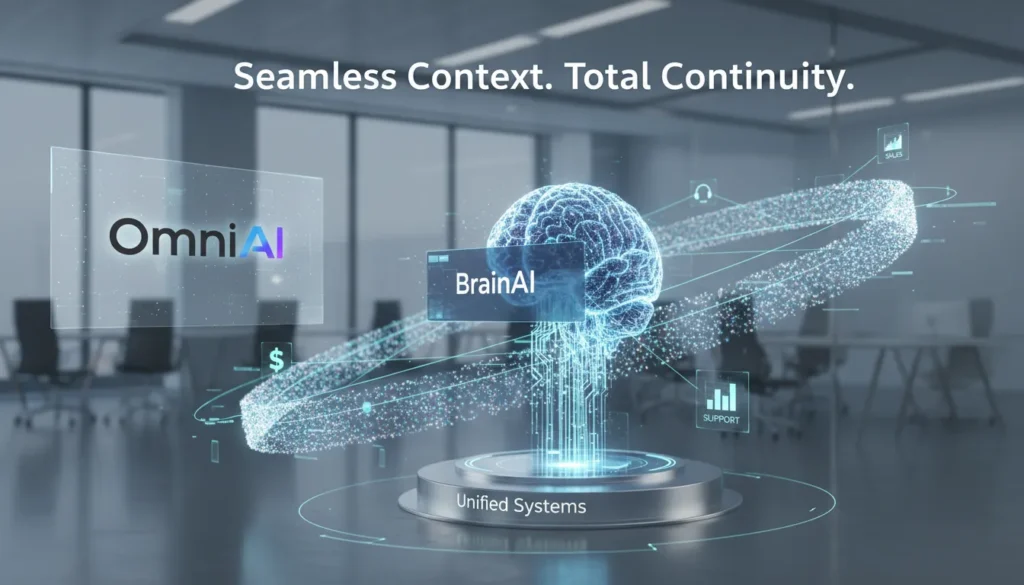
In today’s hyper-competitive business landscape, organizations frequently grapple with fragmented systems and disjointed data, hindering agile market responsiveness and true customer-centricity. Traditional Go-To-Market (GTM) strategies, often reliant on siloed CRMs and ERPs, struggle to deliver the unified intelligence needed to truly understand and engage customers. Consequently, this creates a significant challenge for businesses aiming to grow agent-first GTM models effectively, which demand a paradigm shift from reactive operations to proactive, intelligent orchestration. Omni AI offers a transformative solution, introducing an AI-native architecture designed from the ground up to eliminate these inefficiencies. This article will explore the foundational principles, operational mechanisms, and strategic advantages of leveraging specialized AI agents to unify business processes, enhance customer experiences, and unlock unprecedented operational scalability. By understanding how an integrated intelligence layer can revolutionize GTM execution, readers will gain insights into achieving a cohesive, future-proof enterprise.
Summary
Strategies to Grow Agent-First GTM: Foundations and Principles
To effectively implement this **agent-first GTM** approach, organizations must first establish a robust set of foundational principles that shift away from traditional, siloed approaches. This strategy, moreover, represents a fundamental re-imagining of how a business interacts with its customers and manages internal operations, moving from reactive responses to proactive intelligence. It demands a holistic view where every interaction and data point contributes to a unified, continuously evolving understanding of the customer journey. This paradigm, therefore, requires a commitment to integration and intelligent automation at its core.
The cornerstone of this operational transformation lies in data unification and the orchestration of intelligent agents. Unlike legacy systems that merely aggregate data, an agent-first architecture, exemplified by Omni AI’s BrainAI, functions as a central nervous system. Specifically, this core intelligence orchestrates an ecosystem of specialized agents, each designed to handle specific tasks, ranging from sales optimization to finance management. The underlying principle is that intelligence should not be a tacked-on feature but an inherent part of the operational fabric, proactively driving outcomes rather than passively awaiting commands.
Key principles for implementing such a model include fostering a culture of continuous learning and seamless contextual flow. Omni AI achieves this with its unique Möbius Strip architecture, ensuring that knowledge gained by one agent, such as Sales AI, immediately enriches the context for others, like Support AI or Recovery AI. This, in turn, eliminates information silos, creating a single, omniscient memory across the enterprise. Moreover, the deployment of specialized agents (e.g., Sales AI, Inbox AI, Finance AI, Campaigns AI, Customers AI) ensures that intelligence is applied precisely where it’s needed, maximizing efficiency and personalization.
Building on these foundations, companies must prioritize an AI-Native approach, a stark contrast to traditional CRMs or ERPs that attempt to bolt AI onto outdated frameworks. As our founder, Carlos Guerra Jr., observed, many businesses struggle with ‘patchwork’ AI solutions that fail to address fundamental fragmentation. An AI-Native design, combined with global governance and security standards from our Delaware base, ensures a scalable, secure, and future-proof intelligence layer. This, ultimately, enables enterprises to transition from fragmented systems to a cohesive, intelligent operational entity, optimizing ROI and operational agility.
The Role of AI Agents in Modern GTM Execution
In today’s fast-evolving business landscape, the shift towards an agent-first GTM (Go-To-Market) strategy marks a pivotal transformation, moving beyond mere automation to intelligent orchestration. Traditional GTM models often grapple with disjointed systems and manual handoffs, leading to inefficiencies and lost opportunities. AI agents, by contrast, fundamentally alter this paradigm by offering specialized, autonomous capabilities that work in concert. These intelligent entities are not merely tools; they are proactive participants in the entire customer journey, from initial outreach to post-sale support, fundamentally changing how organizations operate and grow.
Omni AI exemplifies this next-generation approach with its AI-Native architecture, where a central BrainAI orchestrates a suite of specialized agents. Unlike traditional CRMs that bolted on AI features to existing frameworks, this platform was built from the ground up to empower a seamless, intelligent operation. This design, consequently, allows for a continuous flow of context and learning—a true Möbius Strip of data—ensuring that insights gained by one agent instantly inform others. For instance, what the Sales AI learns about a prospect’s preferences immediately enriches the Support AI’s understanding, fostering a unified customer experience.
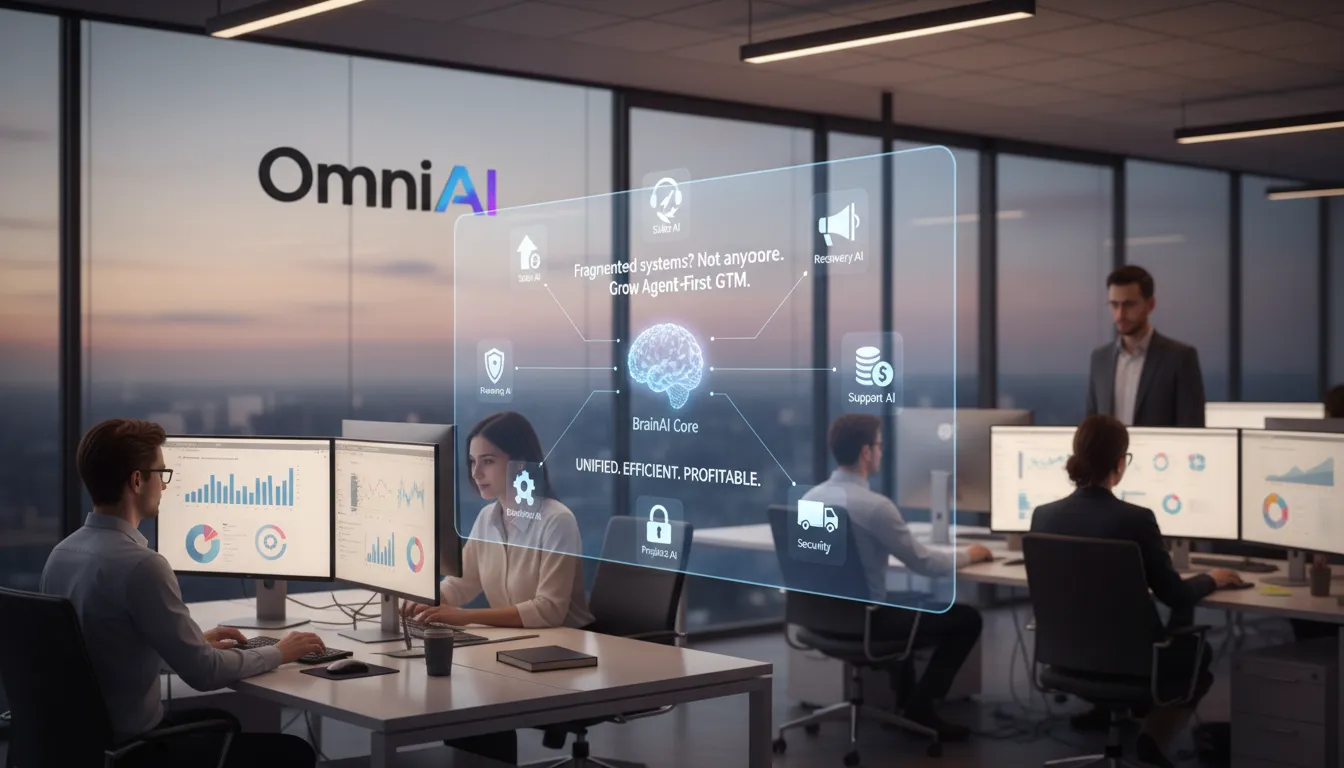
The integration of these agents across various functions creates a holistic and responsive GTM ecosystem. Omni AI, for this reason, leverages autonomous agents to streamline critical business processes, preventing the fragmentation seen in companies relying on multiple, disparate systems like Salesforce or Zendesk. The platform’s ten specialized agents include:
- Sales AI: Optimizes the commercial pipeline and conversion rates.
- Inbox AI: Manages communication channels intelligently.
- Recovery AI: Automates credit recovery and debt collection.
- Finance AI: Ensures accurate billing and invoice management.
- Support AI: Handles technical assistance and resolves service tickets.
- Campaigns AI: Drives proactive marketing based on real-time behavior.
- Customers AI: Manages relationships and fosters loyalty.
- Voice AI: Provides intelligent voice interfaces for interactions.
- Products AI: Applies intelligence to catalog and inventory management.
- Strategy AI: Supports executive decision-making with real-time data.
This comprehensive network of AI agents ensures that every touchpoint is optimized, data is never siloed, and the business can advance its **agent-first strategy** with unprecedented agility and insight.
Designing Customer-Centric Pathways with Agentic AI
The paradigm shift towards agent-first strategies fundamentally redefines how businesses interact with their customers. Moving beyond mere automation, agentic AI, exemplified by OmniAI’s architecture, enables the design of truly customer-centric pathways that anticipate needs and proactively engage. In contrast to legacy CRMs that merely record interactions, an AI-native platform, built from the ground up with intelligence, creates dynamic, personalized journeys. This approach, therefore, ensures that every touchpoint is informed by a complete, real-time understanding of the customer, fostering deeper relationships and driving sustained loyalty.
At the core of this transformation is OmniAI’s BrainAI, acting as the central orchestrator that intelligently commands a suite of specialized agents. This system creates a continuous context, akin to the Möbius Strip concept, where insights gained from one customer interaction seamlessly flow across all operational agents. As an illustration, if the Sales AI identifies a specific customer preference, that learning isn’t siloed; it immediately informs the Campaigns AI for targeted marketing and the Support AI for personalized assistance. This, ultimately, eliminates the fragmented customer experience common with traditional systems like Salesforce or RD Station, which struggle to unify disparate data points effectively.
These agentic pathways mean that customer service transforms from reactive problem-solving to proactive value delivery. OmniAI’s agents, such as Customers AI for relationship management, Voice AI for intuitive interfaces, and Recovery AI for sensitive follow-ups, work in concert. They don’t just respond to inquiries; they predict potential issues, offer relevant solutions before being asked, and curate experiences tailored to individual customer behaviors and historical data. This integrated intelligence allows businesses to effectively advance this **agent-first paradigm** by creating an unparalleled, unified customer journey that feels seamless and genuinely personalized, ultimately improving retention and lifetime value.
Scaling Operations and Market Reach Through Agent-Driven GTM
To truly **scale GTM initiatives** effectively, a robust operational backbone transcending traditional data silos is paramount. An AI-native architecture, such as Omni AI’s, provides this indispensable foundation. Leveraging its central orchestrator, BrainAI, the platform ensures every operational facet—from customer interaction to retention—operates in perfect synchronicity. This continuous information flow, inspired by the Möbius Strip, ensures insights from one agent instantly enrich context for all others, thereby enabling proactive decisions and an informed enterprise, which is crucial for expansion.
Expanding market reach effectively hinges on consistency and localized intelligence, capabilities this agent-driven process inherently delivers. Omni AI’s comprehensive suite of specialized agents—including Sales AI, Inbox AI, Recovery AI, Finance AI, Support AI, Campaigns AI, Customers AI, Voice AI, Products AI, and Strategy AI—empowers businesses to penetrate new territories with precision. These agents, furthermore, learn from market dynamics and customer behaviors, allowing tailored engagement strategies that resonate locally while upholding stringent global governance. The platform’s Delaware foundation, coupled with LGPD and GDPR readiness, provides the security and compliance vital for international expansion, thereby unifying fragmented global operations.
This design philosophy originates from the founder’s extensive consultant background, observing firsthand the inefficiencies of traditional CRMs attempting to retrofit AI. This critical experience, consequently, underscores Omni AI’s unique position as a truly AI-native solution, meticulously built for intelligent, integrated management. It enables companies to not only scale operations efficiently but also expand their market footprint, transforming fragmented processes into a cohesive, intelligent whole.
Measuring ROI and Future Prospects of an Agent-First Approach
Measuring the Return on Investment (ROI) from an agent-first approach requires a multi-faceted assessment, moving beyond simple cost savings. Key performance indicators (KPIs) become critical, encompassing operational efficiency, customer satisfaction, and revenue growth. Organizations adopting this paradigm typically observe significant reductions in processing times for complex tasks, improved resource allocation, and a marked decrease in human error rates. For instance, the Recovery AI agent within Omni AI’s ecosystem can automate collection processes, leading to faster cash flow and reduced manual overhead. Concurrently, Sales AI optimizes pipeline conversion, directly impacting top-line revenue. This approach, therefore, fosters a leaner, more agile operation, where autonomous agents handle repetitive tasks, freeing human teams for strategic initiatives and complex problem-solving. Such efficiency gains are not merely theoretical; they translate into tangible financial benefits, demonstrating a clear ROI by optimizing both operational costs and revenue generation capabilities.
The future prospects of an agent-first approach are transformative, envisioning a landscape where AI agents are not just tools but integral, proactive partners in enterprise operations. This evolution is underpinned by continuous learning and seamless context flow, principles central to Omni AI’s design. Our BrainAI, acting as the central orchestrator, ensures that the intelligence gleaned by one agent, such as Support AI from customer interactions, immediately enriches the knowledge base for others, like Campaigns AI for targeted marketing. This ‘Möbius Strip of Data’ eliminates information silos, thereby creating a continuously optimizing, self-aware organizational intelligence layer. Companies that successfully implement such a strategy will increasingly leverage AI-native platforms to predict market shifts, personalize customer experiences at scale, and innovate at an unprecedented pace. The shift is not towards replacing humans but augmenting their capabilities, allowing them to focus on high-value, creative tasks while intelligent agents manage the operational complexities. This paradigm sets the foundation for a truly adaptive and hyper-efficient enterprise.
Conclusion
The journey to adopting an agent-first GTM strategy is not merely an incremental upgrade but a fundamental re-architecture of business intelligence and operations. As this article has detailed, the path to sustained growth and competitive advantage lies in moving beyond fragmented systems and embracing a truly AI-native framework. Omni AI’s distinctive approach, centered around its orchestrating BrainAI and the continuous context flow of its Möbius Strip architecture, consequently presents a robust solution to the pervasive challenge of operational silos. By enabling specialized agents—from Sales AI to Finance AI—to operate within a unified, self-learning ecosystem, businesses can achieve unparalleled efficiency, personalization, and strategic foresight. This shift, ultimately, empowers enterprises to transform reactive processes into proactive intelligence, delivering superior customer experiences and optimizing every touchpoint across the entire value chain.
The insights from Omni AI’s founder, born from extensive consulting experience, underscore the critical need for solutions built from the ground up with AI at their core, rather than attempting to bolt intelligence onto outdated frameworks. With global governance standards embedded from its Delaware base, Omni AI, furthermore, provides a secure, scalable, and compliant platform ready for the complexities of international markets. This integrated intelligence layer not only ensures high ROI through optimized operations and enhanced customer loyalty but also positions companies to adapt rapidly to future market demands. For organizations seeking to genuinely revolutionize their Go-To-Market execution and achieve transformative growth, embracing an agent-first strategy powered by Omni AI is the definitive next step. It is the intelligence layer that enables businesses to truly thrive and strategically grow agent-first GTM efforts, turning operational complexity into a competitive advantage.