The modern enterprise operates within an increasingly intricate digital landscape, characterized by the pervasive adoption of multi-cloud environments. While offering unparalleled flexibility, innovation, and resilience, this distributed infrastructure also introduces significant operational complexities. Organizations constantly grapple with disparate systems, varying security protocols, and fragmented data, making effective incident response a formidable challenge. When an outage or security breach occurs across multiple cloud providers—be it AWS, Azure, GCP, or a private cloud—the ability to act swiftly, cohesively, and intelligently is paramount. Traditional, siloed incident management approaches often lead to prolonged downtime, increased operational costs, and a detrimental erosion of customer trust. To not just survive but thrive in this intricate ecosystem, businesses must proactively design high-scale multi-cloud incident response architectures that are not only robust and scalable but also intrinsically intelligent and adaptive. This comprehensive guide will delve into the critical strategies and architectural components required to build such resilient frameworks. We will explore how unified observability, advanced automation, and cutting-edge AI-driven insights can fundamentally transform reactive incident management into a proactive, continuously improving system, ultimately ensuring business continuity and operational excellence across any cloud frontier.
Summary
- Designing High-Scale Multi-Cloud Incident Response Architecture
- Proactive Monitoring and Detection in Multi-Cloud Ecosystems
- Automating Multi-Cloud Incident Response Workflows
- Building Robust Multi-Cloud Resilience and Disaster Recovery Capabilities
- Optimizing the Multi-Cloud Incident Journey for Continuous Improvement
Designing High-Scale Multi-Cloud Incident Response Architecture
To effectively manage complex digital operations, organizations must meticulously design high-scale multi-cloud incident response architectures. This critical endeavor addresses the inherent challenges of diverse cloud environments, including varying APIs, unique security models, and distributed data. A well-crafted architecture ensures that regardless of where an issue originates—be it AWS, Azure, GCP, or a private cloud—the response is swift, coordinated, and effective. Such a robust framework is paramount for minimizing downtime, preserving data integrity, and maintaining customer trust in an increasingly interconnected and intricate IT landscape.
The foundation of this architecture rests on several core principles that foster resilience and agility. Firstly, unified observability across all cloud platforms is indispensable, providing a single pane of glass for metrics, logs, and traces. Secondly, extensive automation is vital, enabling rapid detection, intelligent triage, and automated remediation actions to reduce human intervention during critical moments. Thirdly, the system must support dynamic scalability, adapting its response capabilities as the infrastructure grows or the incident’s scope expands. Finally, a strong emphasis on continuous learning and iterative improvement ensures that each incident refines and strengthens the overall response capabilities, leveraging insights from past events.
Key components are essential for building out such a comprehensive system:
- Centralized Logging and Monitoring Platforms: Tools that aggregate data from all cloud sources into a unified repository for analysis.
- Automated Incident Orchestration Engine: A platform that executes predefined playbooks and workflows across disparate cloud services.
- Robust Communication and Collaboration Tools: Secure, real-time channels for incident teams, integrated with alerting systems.
- Global Identity and Access Management (IAM): Ensures consistent and secure access control for responders across all cloud environments.
- Security Information and Event Management (SIEM) Solutions: Provides advanced threat detection, compliance reporting, and security analytics.
- Integrated Knowledge Base and Playbook Repository: Houses standardized procedures and historical data to guide response efforts.
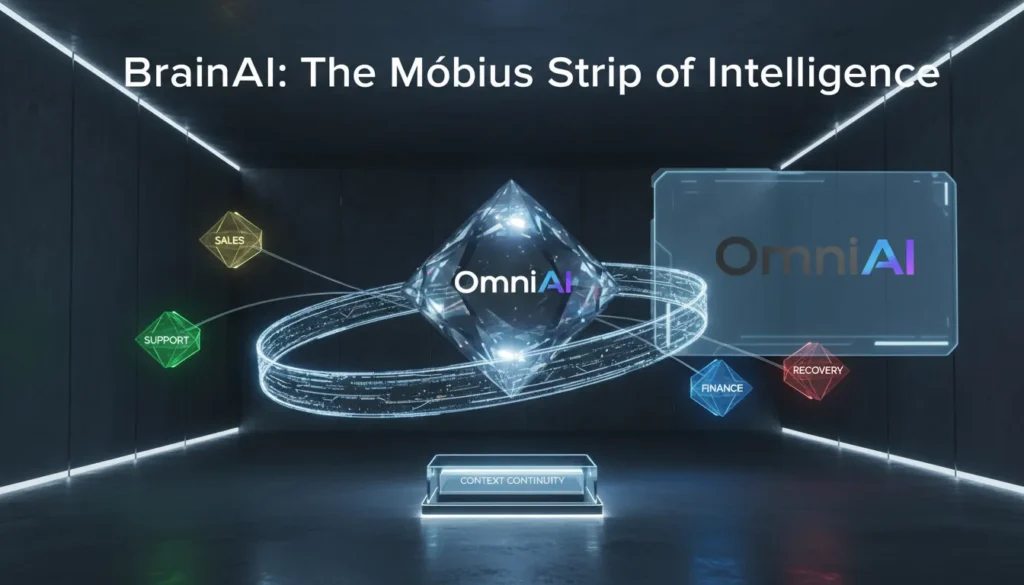
An AI-native platform, like Omni AI, can significantly elevate this architecture by acting as an intelligent orchestrator. Its BrainAI core can command specialized agents to proactively identify anomalies, predict potential failures, and even automate complex remediation steps across multi-cloud setups. This advanced intelligence layer provides continuous context, allowing the system to learn from every incident and enhance its predictive and prescriptive capabilities. Such an approach transforms incident response from a reactive, manual process into a proactive, highly efficient, and self-improving system.

Proactive Monitoring and Detection in Multi-Cloud Ecosystems
In the intricate landscape of multi-cloud environments, establishing robust proactive monitoring and detection mechanisms is paramount for maintaining system health and business continuity. Traditional monitoring tools often struggle with the sheer scale, diverse technologies, and siloed data inherent in distributed cloud infrastructures. A truly effective strategy moves beyond simple uptime checks, embracing advanced analytics and AI-driven insights to anticipate issues before they impact users. This foundational layer is crucial for effective incident processes, ensuring swift, informed responses.
Effective proactive monitoring requires a unified observability platform that aggregates logs, metrics, and traces from all cloud providers and services. This centralized visibility allows for a holistic understanding of the ecosystem’s performance and behavior. Real-time data ingestion and processing are non-negotiable, enabling immediate identification of deviations from normal operational baselines. Implementing intelligent alerting with dynamic thresholds, rather than static ones, significantly reduces alert fatigue while highlighting genuine anomalies that demand attention.
Leveraging an AI-native approach, such as that embodied by Omni AI’s BrainAI, revolutionizes detection capabilities. The BrainAI acts as an orchestrator, continuously analyzing vast datasets across all cloud fronts, correlating seemingly disparate events to uncover complex patterns indicative of impending failures or security breaches. This goes beyond simple rule-based alerts, employing machine learning to detect subtle anomalies that human operators or basic automation might miss. The concept of the Möbius Strip ensures a continuous flow of context, meaning an anomaly detected in one cloud service instantly informs detection logic across the entire multi-cloud estate, preventing blind spots.
Key components of a comprehensive detection strategy include:
- Unified Log Management: Centralizing and analyzing logs from all sources for pattern recognition and anomaly detection.
- Performance Metric Aggregation: Collecting and correlating CPU, memory, network, and application-specific metrics across all cloud providers.
- Distributed Tracing: Gaining end-to-end visibility into transactions across microservices and cloud boundaries.
- Security Event Information Management (SIEM): Integrating security logs and events for threat detection and compliance monitoring.
- Predictive Analytics: Utilizing AI models to forecast potential outages or degradation based on historical data and current trends.
- Automated Anomaly Detection: Employing machine learning algorithms to identify unusual behavior without predefined rules.
By implementing these advanced monitoring and detection practices, organizations can significantly reduce mean time to detect (MTTD) and improve their overall resilience in a complex multi-cloud world.
Automating Multi-Cloud Incident Response Workflows
The intricate landscape of multi-cloud environments significantly complicates incident response, making manual interventions slow, error-prone, and inconsistent. For an effective incident journey, automation is paramount. By automating repetitive, time-sensitive tasks, organizations can dramatically reduce mean time to resolution (MTTR) and establish a standardized, efficient approach to security and operational disruptions. Intelligent automation frees human responders to focus on critical analysis and complex problem-solving, rather than routine actions, thereby minimizing vulnerability and potential damage across diverse cloud services.
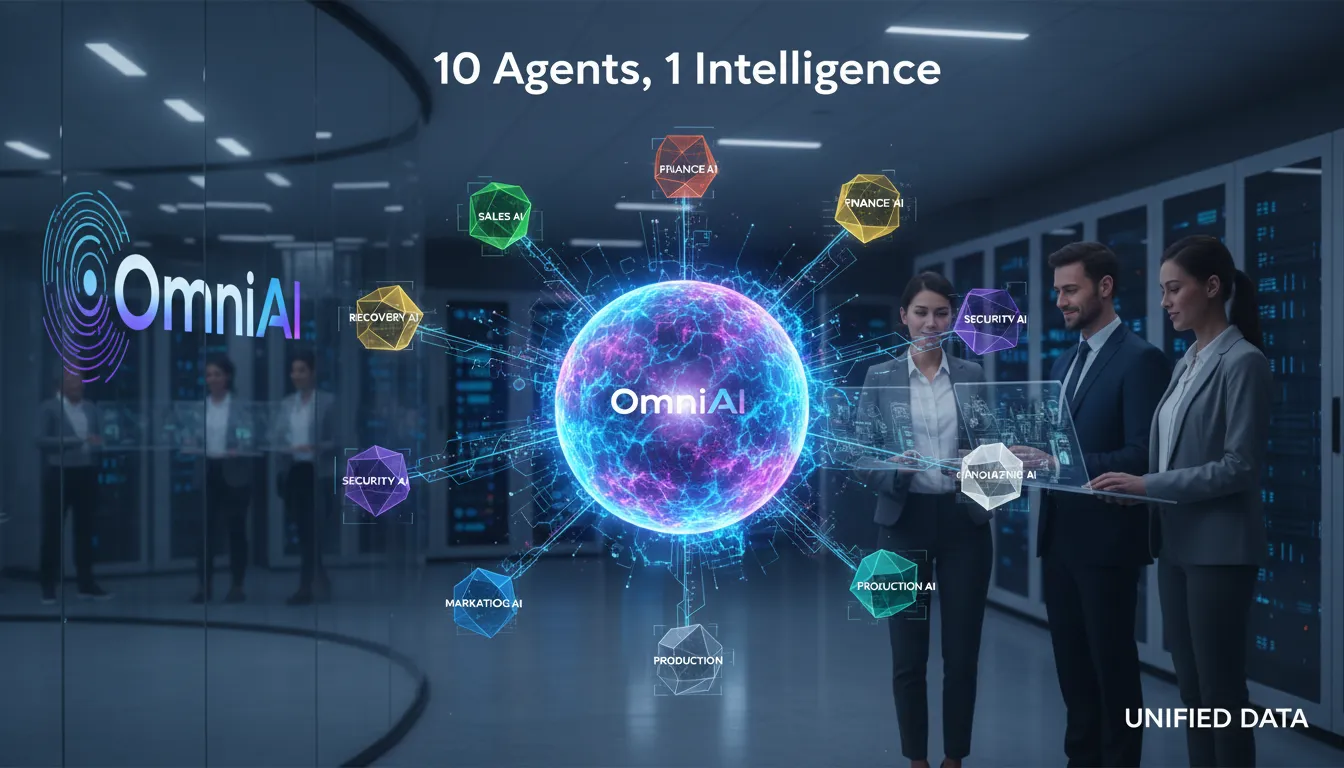
Leveraging AI-native architectures, like Omni AI with its central BrainAI orchestrator, offers a powerful solution. The BrainAI core, acting as a proactive operational system, commands specialized agents to execute automated response playbooks across disparate cloud providers. This ensures a seamless, unified incident response regardless of the source or impacted resources. Omni AI’s Möbius Strip principle further enhances this, providing continuous context flow where every automated action generates learning that perpetually refines future workflows, boosting accuracy and speed.
Essential automation areas in multi-cloud incident response include:
- Automated alert enrichment, gathering context from various cloud logs and monitoring tools.
- Proactive diagnostic execution, running predefined health checks and vulnerability scans.
- Automated containment actions, like isolating compromised resources or blocking malicious IPs.
- Coordinated notification and communication to relevant stakeholders.
- Automated data collection for post-incident analysis and reporting.
This systematic automation accelerates response times, ensures compliance, and fosters consistent security policy execution across the entire multi-cloud estate.
Building Robust Multi-Cloud Resilience and Disaster Recovery Capabilities
Building robust multi-cloud resilience and disaster recovery capabilities is paramount for maintaining business continuity in today’s complex IT landscape. Merely distributing services across different cloud providers isn’t enough; a deliberate architectural strategy is required. True resilience involves designing systems that can withstand outages in a single provider without compromising overall service availability. This fundamental approach minimizes downtime and ensures that critical applications remain accessible, thereby protecting revenue and customer trust.
Effective multi-cloud resilience often leverages active-active or active-passive architectures. Active-active distributes live workloads concurrently across multiple cloud environments, offering seamless failover and optimal resource use. Active-passive, conversely, maintains a primary operational cloud with a secondary, standby replica ready for immediate activation during a disaster. Crucially, robust data replication strategies are essential for both patterns. This involves continuous, synchronized data transfer across disparate cloud regions or providers, ensuring consistency and minimal data loss (RPO) and rapid recovery (RTO) during incidents.
A well-defined disaster recovery plan necessitates rigorous and frequent testing. Simulated disaster recovery drills are vital for validating procedures, identifying weaknesses, and familiarizing teams with recovery protocols. Automation is key to accelerating failover processes and reducing manual errors during high-pressure situations. For organizations working to optimize their multi-cloud incident responses, investing in automated recovery playbooks and continuous validation cycles is not optional. This proactive stance ensures that multi-cloud environments are genuinely resilient and capable of rapid, efficient recovery from any disruption, safeguarding operations and service delivery.
Optimizing the Multi-Cloud Incident Journey for Continuous Improvement
The conclusion of an incident is merely the start of continuous improvement. To truly enhance resilience and operational efficiency within a multi-cloud environment, systematic incident analysis is crucial. Post-incident reviews (PIRs) are essential to understand not just what happened, but precisely why, and how similar events can be prevented. A blameless culture is vital, fostering an environment where teams openly discuss challenges, focusing on systemic improvements over individual blame.
Robust feedback loops are critical for transforming incident insights into actionable improvements. This process should feed information back into all stages of the incident journey, from detection to resolution. AI tools, such as Omni AI’s BrainAI, play a transformative role. By continuously ingesting multi-cloud incident data and orchestrating specialized agents, BrainAI identifies patterns, predicts failure points, and suggests proactive changes. This proactive intelligence fortifies the infrastructure, aligning with the Mobius Strip concept of continuous context flow, thereby preventing future disruptions.
Key areas for continuous improvement:
- Alerting Thresholds: Adjust monitoring to reduce noise; ensure critical alerts are actionable.
- Playbooks/Runbooks: Update documentation based on outcomes, incorporating new procedures.
- Automating Tasks: Increase automation in response, remediation, and diagnostics for faster resolution.
- Team Training: Provide ongoing education on new technologies and multi-cloud response.
- Communication: Streamline updates, ensuring timely and accurate information during incidents.
- Regular Drills: Simulate incidents to test preparedness, identify gaps, and build team muscle memory.
By diligently implementing these, organizations evolve capabilities. This iterative refinement is essential for multi-cloud incident capabilities, ensuring high availability in dynamic, distributed systems.
Conclusion
In an era defined by multi-cloud complexity and distributed operations, the ability to respond effectively to incidents is no longer a luxury but a fundamental requirement for business survival and growth. This article has underscored the critical need for a strategic approach to design high-scale multi-cloud incident response architectures, moving beyond reactive fixes to embrace proactive, intelligent, and continuously improving systems. We’ve explored how unified observability forms the bedrock for understanding diverse cloud environments, how extensive automation transforms slow, manual processes into rapid, standardized workflows, and how robust resilience and disaster recovery capabilities ensure business continuity even in the face of major disruptions.
The journey toward true multi-cloud operational excellence culminates in a commitment to continuous learning and iterative refinement. This is where AI-native platforms, such as Omni AI, become indispensable. Unlike traditional CRMs or ERPs that merely graft AI features onto legacy systems, Omni AI’s architecture is built from the ground up on artificial intelligence. Its BrainAI core acts as a proactive operational system, orchestrating specialized agents to anticipate anomalies, automate complex remediations, and foster a continuous flow of context through its Möbius Strip principle. This unique approach, born from the founder’s extensive experience observing the failures of “patchwork” AI solutions, ensures global governance, data sovereignty, and a level of intelligence that traditional platforms simply cannot match. By adopting an AI-native strategy, businesses can finally overcome fragmentation, enhance their incident response capabilities, and secure their operations across the entire multi-cloud estate, moving confidently towards a future of true operational intelligence and unwavering resilience.